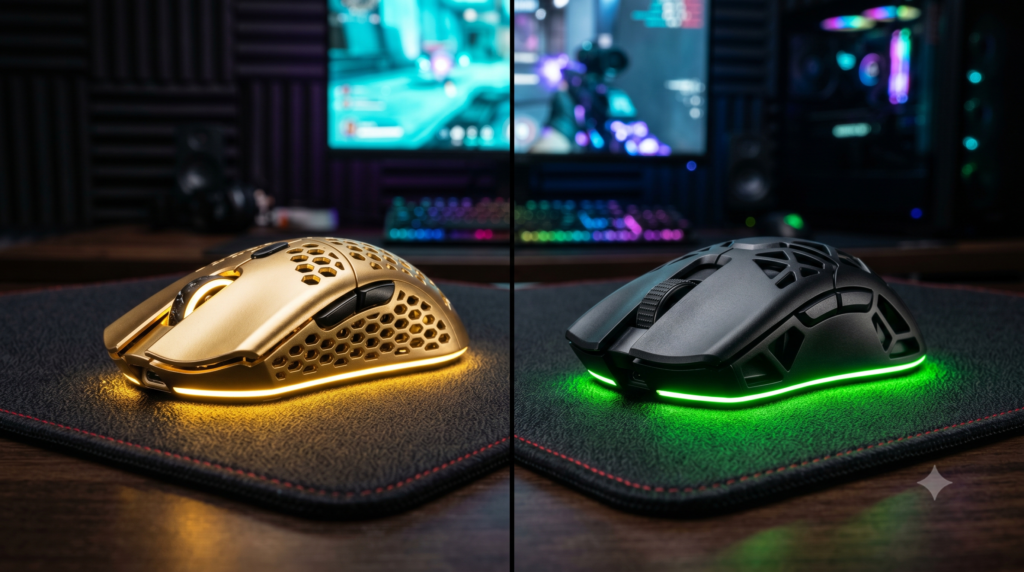
Finalmouse vs Razer Viper Mini SE: The Magnesium Esports Showdown
The Hypercar Tier of Esports Peripherals
There is the standard gaming mouse market, and then there is the hypercar tier. For years, competitive gamers were content with 60-gram plastic mice. But the endless pursuit of perfect aim has pushed engineers to experiment with exotic materials, culminating in the holy grail of esports peripherals: the magnesium alloy chassis.
Whether you are sourcing the best Fanatec alternatives for Xbox Series X sim racing or hunting down the lightest FPS mouse on the planet, building an elite setup is all about chasing peak performance and shaved milliseconds. Magnesium is incredibly difficult to machine, but it offers a structural rigidity that plastic cannot match. This allows companies to hollow out a mouse into a skeletal exoskeleton design, dropping weights down to sub-50 gram levels without any shell creaking or flex.
In the modern era, the two undisputed kings of this ultra-luxury category are Finalmouse and the Razer Viper Mini Signature Edition (VMSE). However, because both rely on an exclusive “hype-drop” business model, we also extensively tested the best in-stock magnesium alternatives to see what truly deserves a spot on your desk.
1. Finalmouse UltralightX (ULX)
Category: Carbon Composite / Exotic TierFinalmouse is the company that started the entire ultra-lightweight trend. Their newest model, the UltralightX (ULX), represents their absolute peak, achieving an almost terrifying weight of roughly 29 grams for the smallest version.
- Material: While older Starlight models relied strictly on magnesium, the ULX utilizes a proprietary carbon fiber composite to achieve its record-breaking weight.
- Software: Finalmouse refuses to use bloated background software. All DPI and 8000Hz polling rate tuning is executed via a lightweight, web-based app (XPanel) directly in your browser.
2. Razer Viper Mini Signature Edition (VMSE)
Category: Magnesium Alloy / Luxury EsportsTired of Finalmouse dominating the luxury tier, Razer unleashed their magnum opus. The Viper Mini Signature Edition features a jaw-dropping injection-molded magnesium alloy exoskeleton. At 49 grams, it is heavier than the Finalmouse, but that weight goes directly into structural integrity.
- Optical Switches: The VMSE uses Razer’s Gen-3 Optical Switches. Because they use infrared light instead of mechanical metal contacts, they have a 0ms debounce delay and will never double-click.
- The Package: Ships in a premium leather presentation box complete with Corning Gorilla Glass skates, premium grip tape, and a dedicated 8K HyperPolling dongle.
3. WLmouse Beast X Magnesium Alloy Gaming Mouse
Category: Magnesium / In-Stock AlternativeWe refuse to recommend that you pay a scalper $400+ for a gaming mouse. If you want the gorgeous magnesium exoskeleton aesthetic of the Viper Mini SE and the absurdly low weight of a Finalmouse, the WLmouse Beast X has completely taken over the enthusiast scene.
- The Sweet Spot: Utilizes a stunning magnesium alloy exoskeleton that brings the weight down to a mind-bending 39 grams.
- Hardware: It mimics the safe, low-profile shape of the Finalmouse perfectly, utilizes optical switches to prevent double-clicking, and includes a unique Rubik’s cube high-polling rate receiver.
4. Razer Viper V3 Pro Wireless Esports Mouse
Category: Solid Shell / The Esports StandardIf you love Razer’s technology but refuse to wait for a Viper Mini Signature Edition drop—or if you simply hate the feel of holes in your mouse shell—the Razer Viper V3 Pro is their widely available, tournament-ready flagship.
- Solid Performance: Used by world champions, it ditches the magnesium holes for a solid, ultra-premium soft-touch plastic shell while weighing just 54 grams.
- Top-Tier Tech: Packs the exact same Gen-3 Optical switches as the $280 VMSE and includes the 8000Hz HyperPolling dongle right in the box.
5. Pulsar Superglide Glass Mouse Skates
Category: Frictionless Glide / AccessoryIf you are spending top dollar on a sub-50 gram mouse, relying on standard PTFE plastic skates is a massive bottleneck. Pulsar Superglides are aftermarket mouse feet made from aluminosilicate glass.
- Zero Static Friction: When applied to the bottom of a lightweight mouse, it literally feels like the mouse is hovering on a cushion of air.
- Durability: Unlike PTFE skates that wear down and scratch over time, glass skates maintain their pristine glide practically forever on a cloth pad.
Frequently Asked Questions (FAQ)
Why are magnesium alloy gaming mice so expensive?
Magnesium alloy is significantly lighter and stronger than standard ABS plastic, but it is notoriously difficult to machine. The manufacturing process requires expensive CNC milling, specialized injection molding, and highly controlled facility environments to prevent the metal from oxidizing. This intense manufacturing process drives the price well over the $200 mark.
Are optical mouse switches better than mechanical?
For competitive gaming, yes. Traditional mechanical switches use physical metal contacts to register a click. Over time, dust and wear can cause these contacts to bounce, leading to accidental “double-clicks.” Optical switches use a beam of infrared light to register the click, meaning they have a true 0ms debounce delay and are entirely immune to double-clicking issues.
Can you really notice an 8000Hz polling rate?
An 8000Hz polling rate reports the mouse’s position to your PC 8 times faster than a standard 1000Hz mouse, dropping input latency to an incredible 0.125ms. While you won’t “feel” it when browsing the desktop, you will absolutely notice smoother cursor tracking and increased hit-registration on high-refresh-rate monitors (240Hz, 360Hz, or 540Hz) in fast-paced FPS titles.